
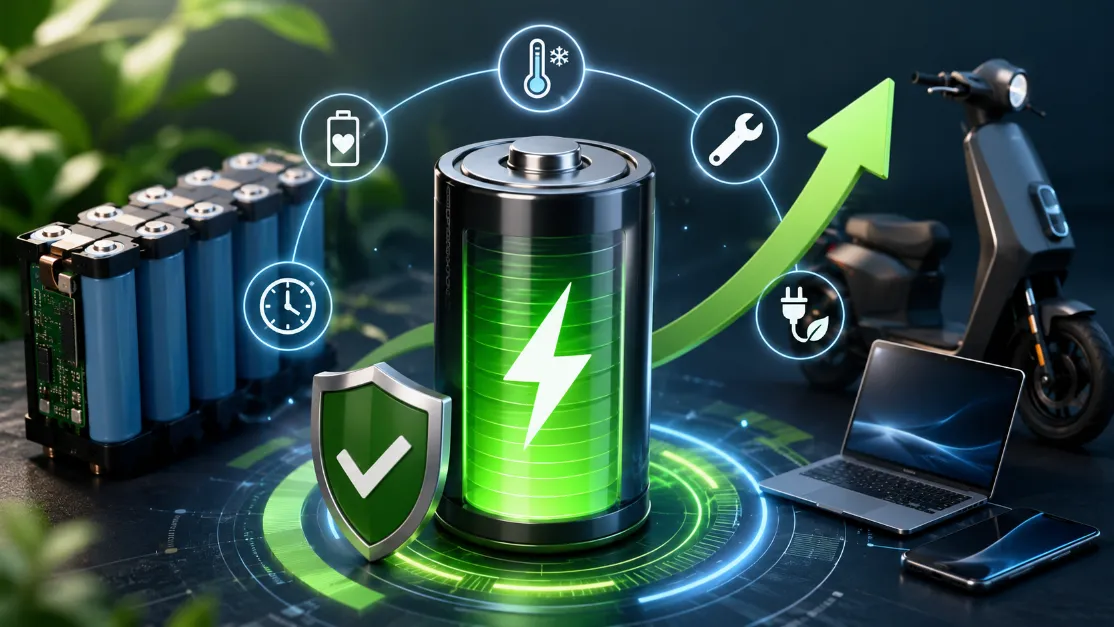
How to Increase Lithium-Ion Battery Life to Improve Performance
Lithium-ion batteries are the unsung heroes of modern technology. They power everything from the smartphone in your pocket to the electric vehicles on our roads. If you are operating an electric fleet, you are likely relying on specialized solutions from top lithium ion battery manufacturers in india to keep your business moving.
But whether it's a high-capacity lithium ion battery for e rickshaw commercial use or just your daily laptop, how you treat your battery determines how long it will last.
Maximizing your battery’s lifespan doesn't just save you money on replacements; it also ensures consistent, peak performance throughout its lifecycle. Here is a comprehensive guide on how to extend your lithium-ion battery life.
1. The Golden Rule: Avoid Extreme State of Charge (SoC)
Lithium-ion batteries experience the most stress when they are completely full or completely empty.
- The Sweet Spot: Try to keep your battery charged between 20% and 80%.
- Why it matters: Leaving a battery at 100% charge for extended periods increases internal degradation. Conversely, letting it drop to 0% can cause the battery's protective circuitry to trip, rendering it permanently dead.
Many modern devices and electric vehicles now feature "optimized charging" settings that cap the charge at 80% until you actually need the extra juice.
2. Keep It Cool (But Not Freezing)
Temperature is the ultimate nemesis of lithium-ion chemistry. High temperatures accelerate the chemical reactions inside the battery, leading to premature capacity loss.
- Avoid Heat: Never leave your devices or vehicles parked under direct sunlight on hot days. For commercial drivers using a lithium ion battery for e rickshaw fleets, parking in the shade during charging or downtime is crucial.
- Avoid Freezing: Charging a battery in sub-zero temperatures can cause permanent "lithium plating," which permanently reduces battery capacity and can cause short circuits.
Pro-Tip: If your device or vehicle feels hot while charging, unplug it immediately and let it cool down.
3. Say "No" to Ultra-Fast Charging (When Possible)
Fast charging is incredibly convenient, but it comes at a cost. Pumping high currents into a battery generates excessive heat and subjects the internal components to mechanical stress.
While advanced products engineered by premier lithium ion battery manufacturers in india are built with sophisticated Battery Management Systems (BMS) to handle fast charging safely, relying on it exclusively will degrade the battery faster than standard, slower charging. Use slow charging overnight and save fast charging for when you are genuinely in a rush.
4. Use the Right Charger
It can be tempting to buy cheap, third-party replacement chargers, but this is a major risk factor for battery health.
Always use chargers certified by the original equipment manufacturer (OEM). Quality chargers communicate directly with the battery's BMS to deliver the exact voltage and current required. A cheap charger can easily overcharge the cells or fluctuate in voltage, drastically shortening the battery's lifespan.
5. Storage Best Practices
If you need to put a battery or an electric vehicle into storage for a few weeks or months, don't store it completely full or empty.
- Ideal Storage Charge: Aim for around 50% charge.
- Environment: Store the battery in a cool, dry climate-controlled environment.
- Check-ins: Check the battery level every few months; if it drops too low due to natural self-discharge, top it back up to 50%.
Summary: A Quick Checklist for Battery Longevity
|
Action |
What to DO |
What to AVOID |
|---|---|---|
|
Daily Charging |
Keep between 20% – 80% |
Letting it sit at 100% or draining to 0% |
|
Temperature |
Keep in cool, shaded areas |
Direct sunlight, hot dashboards, freezing cold |
|
Charging Speed |
Use standard/slow charging |
Exclusive reliance on ultra-fast chargers |
|
Equipment |
Use OEM or certified chargers |
Cheap, unbranded third-party chargers |
By implementing these simple habits, you can significantly extend the operational life of your energy storage systems, ensuring that your devices and electric vehicles perform at their absolute best for years to come.